Selling a parent's Elmont house after a move into assisted living
We are not going to tell you this is urgent, because it may well not be. If the right time is after the holidays, or after your parent has settled into assisted living and is ready to talk about the house, then that is the right time.
A family that has just finished arranging assisted living for a parent is worn out, and worn-out people should not be making property decisions on somebody else's clock. We will give you a number now so the decision is informed whenever you come to it, and it does not expire the moment you put the phone down. Families who moved a parent into assisted living six months ago are just as welcome to call as families who did it last week.
Get the nursing home benefits question answered before you sell
Long-term care benefits and house proceeds interact, and the rules reward planning while punishing improvisation. Speak to an elder law attorney before your parent's house sells, not after.
We say this on every call of this kind and it costs us nothing to say. It has saved money for families we never ended up buying from, which is a trade we are glad to make. Long-term care planning is its own profession and it rewards asking early. If you do not already have an elder law attorney, ask us and we will point you toward people who handle long-term care planning in Nassau County.
What this looks like in Elmont specifically
Elmont is roughly 37,296 people in Nassau County, ZIP 11003, and the housing stock is mostly cape cod, ranch, multi-family. Around Belmont Park and UBS Arena, most of it is old enough that the mechanicals are on their second or third life. The Elmont-UBS Arena stop pulls buyers who commute, which supports the good houses and does very little for the ones that need a roof. We know which of these streets take water, where the older systems fail first, and what the Elmont Union Free School District does to a resale price.
The median has slipped 1.35% year over year as of 2026-05. It is a small move, but a softening market punishes the houses that need work first - buyers with choices do not choose the project. A $725,000 median puts Elmont in the band where buyers are stretching to afford the house and have nothing left for the roof. That is precisely the buyer who walks away from a property needing work, and it is why condition matters more here than the price alone suggests. The median house goes under contract in about 43 days, which is not slow - but it describes houses that were already showable on day one.
The contents are why most families stall
The house is full of a parent's life and somebody has to decide what happens to all of it. Siblings disagree, nobody wants to throw anything away, and the boxes stay where they are for another year.
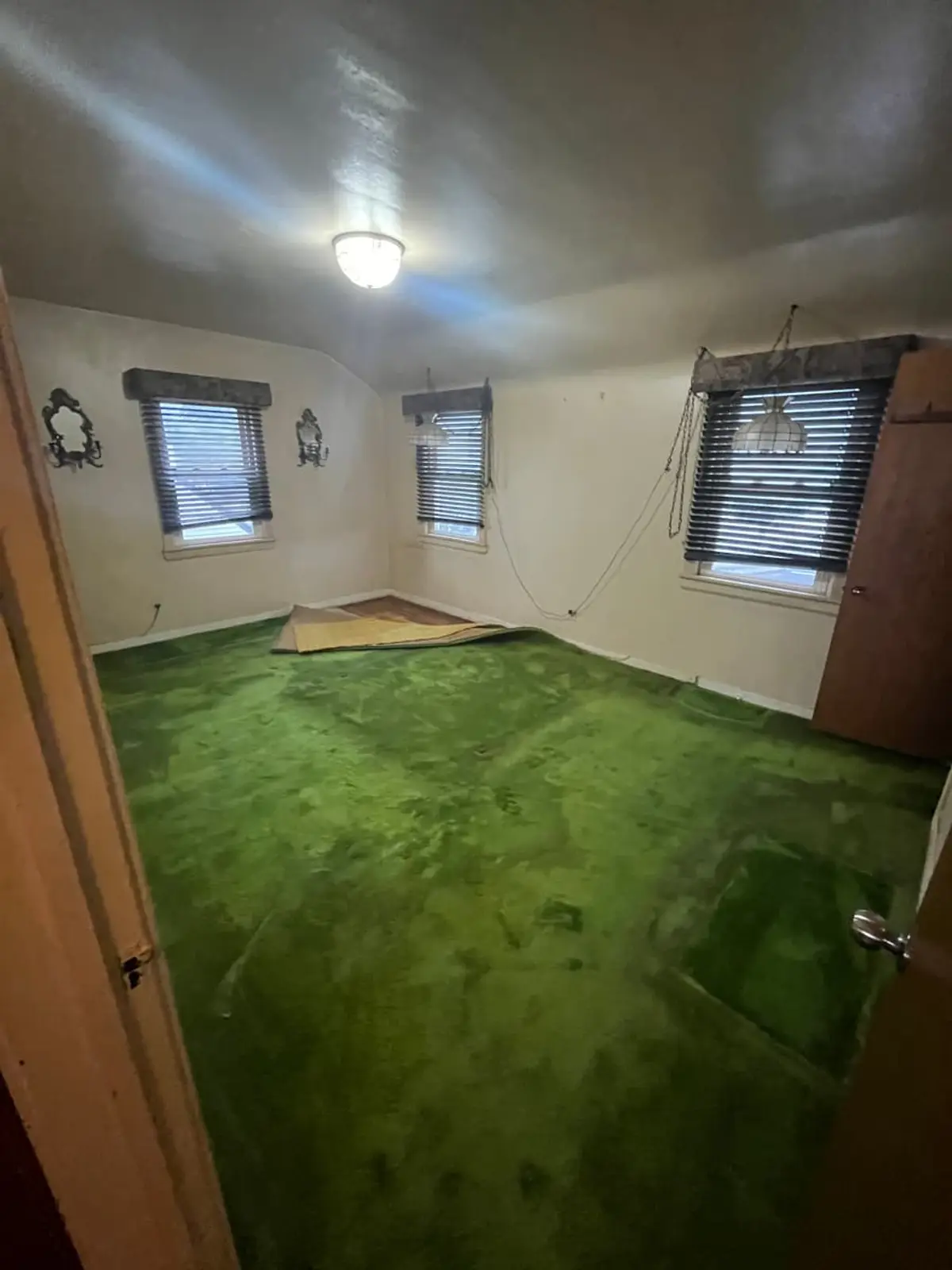
We buy the house contents and all. Cupboards full, attic untouched, basement as it stands. Take the photographs, the paperwork and whatever your parent asks for, and leave the rest to us. The state of the house does not move our number the way families fear it will. We buy parents' houses after a move into a nursing home in whatever condition the move left them.
What the house costs the family alongside nursing home fees
Taxes, insurance at the vacant rate, heat through the winter, and somebody driving past to check on it. In Elmont that adds up quickly, and it adds up against assisted living costs that are already substantial.
That is not a reason to rush. It is a reason to know the figure. A family paying for a parent's nursing home out of savings should at least see what the empty house takes out of the same pot every month. Two costs, one pot, and the assisted living bill is the one that will not wait. The median house in Elmont sold for $725,000 and took about 43 days to go under contract, then another 45 to 60 days waiting on the buyer's mortgage. That is 88 to 103 days in total, for a house that was ready to show on day one.
How we arrive at a number on a parent's house after a move into assisted living
On a parent's house after a move into assisted living we start from the end: what it sells for once the work is done. From that we take away the cost of the work and a margin for the chance that we have misjudged either one. That is the whole method. Nothing is hidden in it.
- What it is worth repaired. Not the Elmont median of $725,000 on its own, but what houses like yours on your street actually closed at recently.
- What the work costs. Roof, boiler, electric, the kitchen and bath. In Elmont the stock is largely cape cod and ranch, and on houses that age the mechanicals are usually the expensive part rather than the cosmetics.
- How long we will hold it. The median Elmont house goes under contract in about 43 days once it is showable, then waits 45 to 60 days more on the buyer's lender. Ours has to get to showable first, and we carry taxes and insurance across the whole of it.
- What we are wrong about. Walls and floors hide things until they come up. We price for that uncertainty, and it accounts for much of the distance between a cash offer and a retail price.
How we can pay this and still make it work
Most cash buyers skip this part. We do not. We run millions of dollars of construction a year, so we buy materials at contractor prices and keep our crews busy all year. The same renovation costs us roughly half of what you would be quoted as a homeowner.
That difference is how we make money. It is also why renovating before you sell seldom comes out ahead: you would pay retail for the roof and the boiler and then hope a buyer pays you back for them. Most of the time they do not. Our margin comes from building for less, not from buying from you for less.
If our number does not work for you, tell us. We would much rather hear it than push. We will go through your situation and give you a straight view of your options, including the ones that leave us out. A lot of people do better listing with an agent, and if you are one of them we will tell you now rather than have you find out later.
How we help Elmont families after a parent moves into assisted living
We have worked with a great many families after a parent moved into a nursing home, and the pattern repeats. Nobody is sure who is allowed to sign, the contents feel impossible, and everybody is too tired to start.
We are useful on all three. We can tell you what documentation a closing will need, take the house with everything still in it, and work to whatever date the family picks. When a question belongs with an elder law attorney or a CPA, we have people we call on and we will make the introduction. Long-term care planning and house sales run on different tracks and both need somebody watching them.
The tax question worth asking first
This one catches families out badly, because it runs against instinct. A house sold while your parent is living is treated differently for tax purposes from one that passes to heirs later, and on a house held for decades the gap between those two outcomes can be substantial.
Ask a CPA about the basis difference between selling your parent's house now, while they are in assisted living, and selling from the estate later. It is the single most valuable question in this whole situation, it cannot be undone afterward, and it sometimes changes the plan entirely.
How selling a parent's house after a move into assisted living in Elmont works
- 1
You tell us about the house
An address in 11003 and a rough idea of condition. Two minutes on the phone or the form. We do not need photographs, a clean house, or anything fixed first.
- 2
A quick look in person
We visit once and it rarely takes more than half an hour. On the cape cod or ranch houses that make up most of Elmont, we check the roof, the boiler and the electric before anything cosmetic.
- 3
We put a figure in writing
You have a written number within 24 hours, a single figure rather than a "somewhere around". Feel free to check it with a Nassau County agent. When a house is ready to list as it is, listing can beat us, and we would rather you knew.
- 4
You choose when to close
Soon, or months away if probate, a tenant or your next move has to come first. You also avoid the 88 to 103 days a listed Elmont house typically takes to find a buyer and get through the buyer's mortgage.
When the house is the plan for paying for care
When a parent's house is the funding plan for their long-term care, the two questions are how much and how soon, and they trade against each other.
A listing can net more if the house shows well and the family can carry it through the wait. A sale to us trades some of that for a date you set and no showings, which matters when a nursing home bill is arriving monthly. Neither is automatically right. What we can do is put a written number in front of the family quickly, so the trade being weighed is the real one.
Common questions
Can we sell a parent's house to pay for assisted living?
Yes, and for many families the house is the plan for funding a nursing home place. What matters is doing it in the right order: authority to sign first, benefits advice second, sale third. We will give you a written number on the Elmont house at any point in that sequence, including before the first two are resolved, so the family can see what it is actually working with.
Can my parent still sell their Elmont house if they have dementia?
Sometimes yes, and sometimes it has to be done by an agent under a power of attorney or by a guardian. Which of those applies to your parent is for an elder law attorney to answer, and it is the first call to make.
We are not ready yet. Is that a problem?
No. Get the number, sit with it, and call when the family is ready. Families often wait until a parent has settled into assisted living before deciding anything, and we will not chase you in the meantime.
Do we have to clear the Elmont house before selling?
No. Take what matters to your parent and to the family, and leave the rest exactly where it is. The clearing is ours to handle after closing, and it is the same answer whether your parent moved into assisted living last month or last year.
What if my siblings do not agree yet?
Get the number first and let the family discuss it from there. If the decision belongs to whoever holds the power of attorney for your parent, an elder law attorney can tell you exactly who signs and what the rest of the family's role is.
Will selling affect the benefits paying for my parent's nursing home care?
Possibly, and the rules are specific enough that nobody should guess at them. Speak to an elder law attorney about how sale proceeds interact with the benefits funding your parent's care, and do it before the house is under contract.